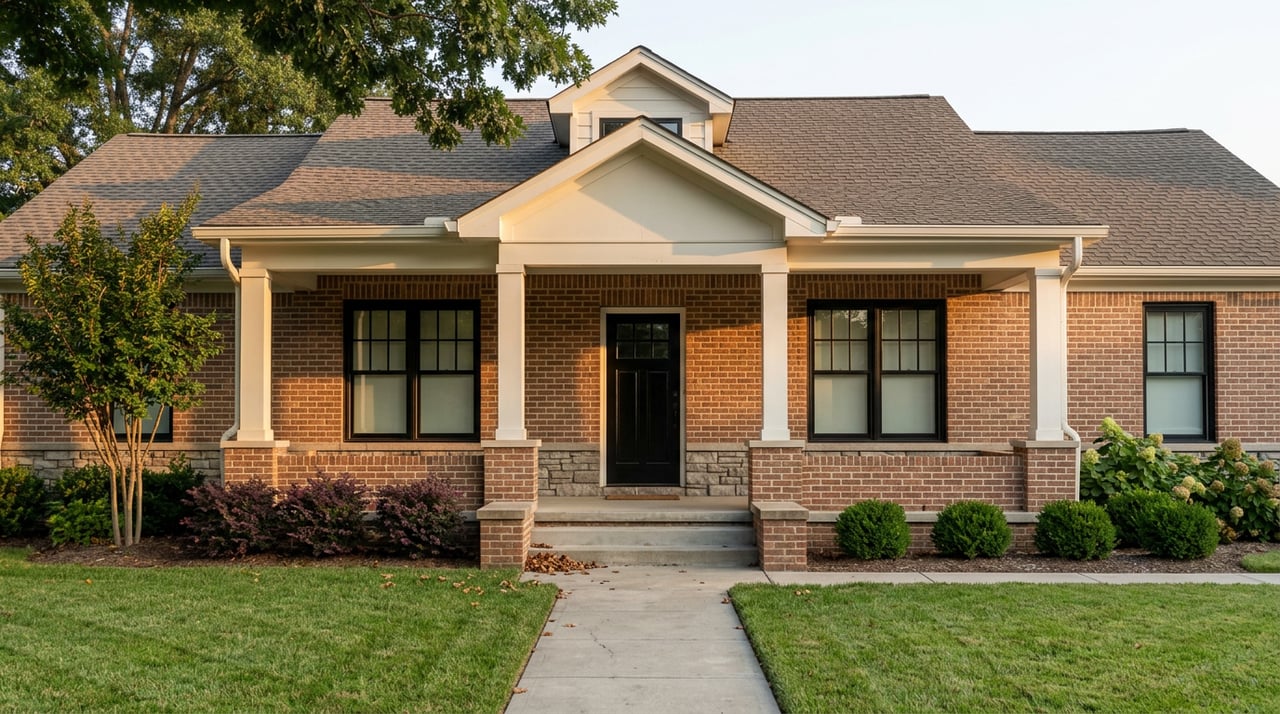
Why Insurance Quotes Split Jackson, TN Homes in Two, and It Has Nothing to Do With List Price
September 3, 2026
September 3, 2026
Two three-bedroom homes go under contract in Jackson the same week, both priced at $265,000. One sits two blocks off North Highland Avenue in an established North Jackson pocket. The other is five years old in Wrights Mill, off the Highway 45 corridor. Same price. Same square footage. Same lender.
Then the insurance quotes come back, and they are not close. The buyer on North Highland Avenue is staring at a number several hundred dollars higher than the buyer in Wrights Mill, and nobody explained why before the offer was signed.
The reason has nothing to do with the sale price on the settlement statement. It has to do with what is behind the drywall.
Homeowners in Jackson currently pay somewhere between $1,660 and $2,950 a year for a standard policy, according to 2026 figures from TCDS Insurance Agency, a Jackson-based independent agency that shops across more than 50 carriers on behalf of local buyers. That is already a wide band before anyone looks at a specific address. Most buyers assume the spread inside that range tracks with home value: bigger house, bigger premium. It mostly does not.
Buyers compare price per square foot, lot size, and school zone before they write an offer. Almost none of them ask what electrical panel is behind the breaker box door, and that is the question that actually moves the quote.
Jackson's housing stock centers on a median build year of roughly 1982. A home built anywhere near that era has a real chance of carrying a Federal Pacific Stab-Lok panel, a Zinsco panel, aluminum branch wiring, or in some cases surviving knob-and-tube. These are not cosmetic quirks. They are the specific list underwriters flag, and in a growing number of cases they are the reason a carrier declines to write a new policy at all rather than simply pricing around the risk.
A licensed Jackson electrician runs through a short checklist when evaluating an older panel: breakers that trip more often than they should, a panel rated below 200 amps trying to serve a house full of modern appliances, a panel stamped Federal Pacific or Zinsco, or visible rust and burn marks around the box. Any one of those is enough to trigger a conversation with an insurer before closing, not after.
None of that shows up on a listing sheet. It shows up in underwriting, usually after the buyer has already fallen in love with the house.
The age line runs through specific parts of the city, and Jackson's own tradespeople describe it the same way from two different angles.
| Corridor | Typical building era | What local tradespeople find |
|---|---|---|
| Established North Jackson, near North Highland Avenue and Oil Well Road, and homes closer to downtown | Older housing stock, consistent with the city's early-1980s median build year | Galvanized water lines, cast iron drains, higher odds of a pre-1985 panel |
| Newer subdivisions along the Highway 45 and Highway 412 corridors, including Wrights Mill, Wyndchase, and Belle Trace | Built within roughly the last two decades | Builder-grade fixtures and occasional installation shortcuts, but panels that meet current amperage and code expectations |
A Jackson plumbing company that services both ends of the city puts it plainly in its own service notes: older homes near downtown Jackson often carry galvanized supply lines and cast iron drains that restrict flow and corrode with age, while homes less than twenty years old in the newer corridors tend to show builder-grade fixtures and early wear rather than outdated infrastructure. Two different failure patterns, tied to two different decades, sitting inside the same city limits.
A 1980s ranch off North Highland Avenue and a five-year-old build in Wrights Mill can list at the exact same price and still clear underwriting on two entirely different paths.
If a buyer is comparing two Jackson listings on price alone, they are comparing the wrong variable. The panel and wiring era is doing more work on the eventual monthly payment than the extra few thousand dollars separating one listing from another.
This cuts both ways for sellers too. A seller in an older North Jackson home who gets ahead of the panel question, either with a documented electrical inspection or a pre-listing general inspection, walks into negotiations with an answer instead of a surprise. Jackson inspectors already build their process around the fact that the city's housing spans everything from older crawlspace-foundation homes to newer slab-built construction, and they tailor the inspection scope accordingly. A pre-listing inspection on an older home, done before a buyer's underwriter forces the issue, keeps the seller in control of the timeline.
New construction is not automatically exempt from this conversation either. Builder-grade fixtures and installation shortcuts show up in homes under twenty years old too, which is exactly why a general inspection scheduled near the end of a builder's one-year warranty period catches problems while they are still the builder's responsibility to fix.
The practical move for a buyer is simple: ask about panel type and wiring age during due diligence, not after the loan is already in underwriting. Get an insurance quote before the inspection contingency expires, not after closing. If the home sits in one of Jackson's older corridors, budget for a conversation with a licensed electrician as part of the offer, the same way a buyer would budget for a roof inspection.
Does a lower price always mean a lower insurance quote? No. A less expensive older home can carry a higher premium than a pricier newer one if the panel or wiring trips an underwriter's flag list. Price and insurability move on separate tracks.
Can a seller fix this before listing? Yes, at least the uncertainty part of it. A pre-listing inspection or a direct electrician evaluation gives a seller documentation to hand a buyer, rather than letting the issue surface for the first time during the buyer's own underwriting.
Is this only a Jackson issue? The underwriting practice around older panel brands is a national one. What makes it a Jackson-specific conversation is the city's own median build year sitting right in the window those flags target, and the fact that the older and newer stock split cleanly along recognizable corridors rather than being mixed evenly across the city.
If you are comparing two Jackson listings and the price tags look identical, the panel behind the breaker box may be the number that actually decides your monthly payment. Stellar Realty Group works these corridors block by block, and Destiny Burns can walk you through what a specific address is likely to face at underwriting before you write an offer. Call or message Destiny today for a free consultation and home valuation.
This article is general information, not legal, tax or financial advice. Consult a qualified professional about your situation.
Stay up to date on the latest real estate trends.

We'd love to hear from you! Whether you're buying, selling, or just exploring your options, we're here to provide answers, insights, and the support you need. Contact us and start planning your next move.