Due Diligence Guide For West Tennessee Land Buyers
April 23, 2026
April 23, 2026
Buying land around Henderson can feel simple at first. You see a pretty tract, imagine the homesite or pasture, and start doing the math. But with West Tennessee acreage, the real questions usually come after that: Can you access it legally, build on it, handle drainage, and get water, septic, and utilities in place without surprises? This guide walks you through a practical due diligence process for Chester County land so you can make a more confident decision before money is fully committed. Let’s dive in.
Your first step is making sure the parcel you want is the parcel you think you are buying. In Chester County, you can review recorded deeds, plats, liens, and related instruments through the Chester County Register of Deeds. You can also use the county assessor portal and Tennessee Property Viewer to search by owner name, address, or parcel ID.
Title work matters because land can carry recorded issues that are not obvious when you walk the property. According to the Consumer Financial Protection Bureau title standards, title evidence should cover public records, tax records, court records, and UCC filings, and it should list exceptions such as easements, covenants, conditions, and restrictions.
That means you should not assume access is clear just because a driveway or field road exists. A recorded easement, right-of-way, or restriction can affect how you use the land. Before you get too far, make sure those exceptions are reviewed carefully.
A current survey is one of the smartest investments you can make when buying acreage. General county tax records can be useful for research, but they are not a substitute for surveyed boundaries, and relying on tax acreage alone can create problems later.
A boundary survey helps confirm corners, lines, and overall acreage. For more detailed review, an ALTA-type survey may also show easements, rights-of-way, utilities, zoning restrictions, and other ownership-related features, based on current survey guidance. If an older survey exists, it may still need recertification or updates.
Here are some general pricing ranges from current cost guides:
Terrain, access, and older deed issues can push those numbers higher. On rural tracts, ordering the survey early helps you catch access questions, fence line issues, and boundary concerns before closing.
If you may divide the land later, do not wait until after closing to ask what is required. In Tennessee, if land is divided into two or more lots, sites, or other divisions for development where septic will be used, the state requires a subdivision evaluation. The TDEC septic and subdivision guidance states that process requires a survey and a soils map prepared by a Tennessee-licensed soils consultant.
This matters for buyers who want flexibility. A tract that works well as one homesite may require more planning, testing, and cost if your long-term goal is to split it for family use or future development.
A parcel can look dry on showing day and still have drainage or flood concerns. That is why floodplain review should happen early, not after you are emotionally committed.
Start with the FEMA Flood Map Service Center and check the property by address. FEMA says zones beginning with A or V are high-risk flood zones, but it also notes there is no true no-risk zone. In other words, being outside a high-risk area does not mean you should ignore drainage.
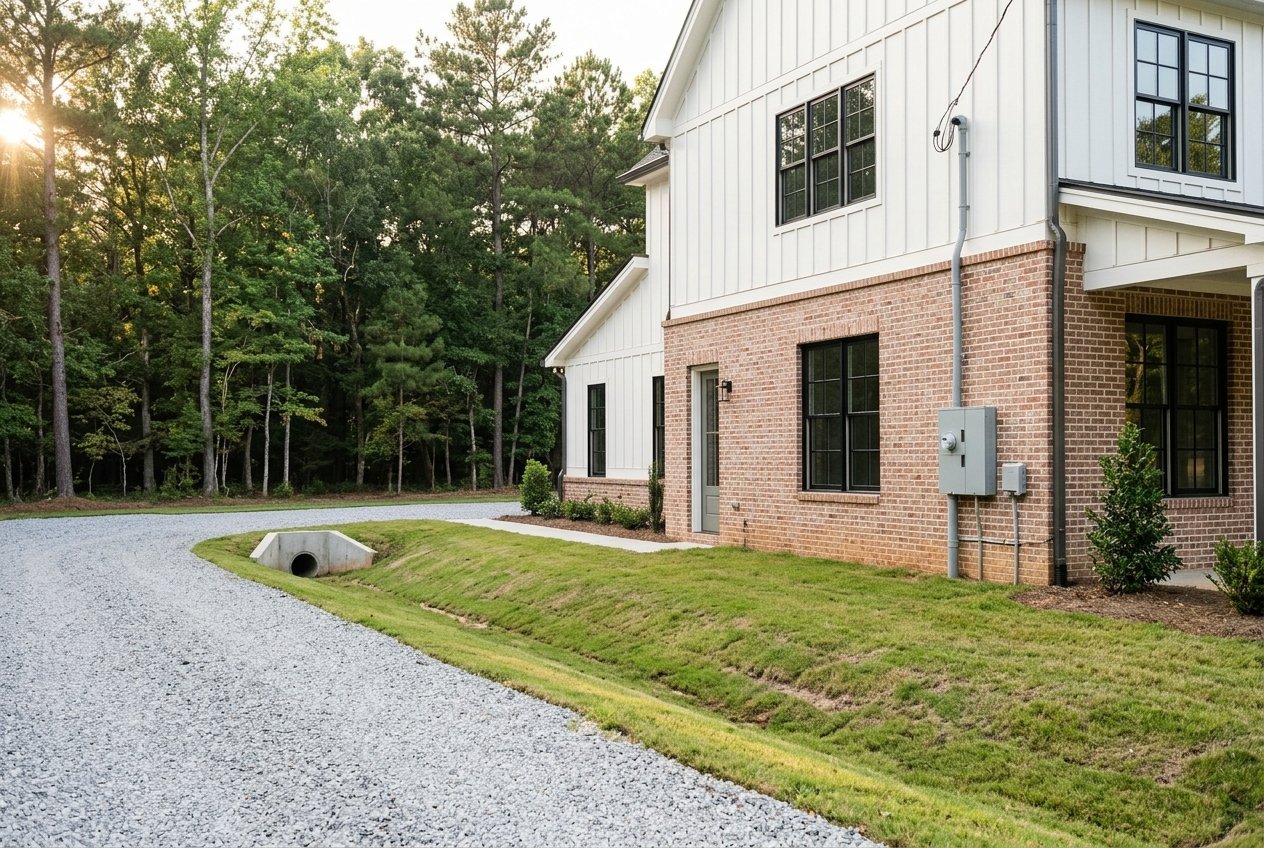
Flood maps are only part of the picture. On acreage near Henderson, it is also smart to walk low spots, creek edges, and natural drainage paths before closing. If a portion of the land stays wet or channels runoff, that can affect where you build, where you place a driveway, and how much site work may cost.
If the parcel is in Henderson city limits or in the Henderson planning region outside city limits, local permit oversight can matter more than buyers expect. The Henderson Building & Zoning Department also serves as the local floodplain manager and requires permits for new construction, additions, renovations, major repairs, and manufactured or modular buildings with a construction value of $2,000 or more.
That is important if you plan to build soon after purchase. Your land budget should not stop at the purchase price because permit costs may be tied to improvement value or project cost.
For many rural parcels, septic approval is one of the biggest make-or-break items. If the property will need a septic system, Tennessee requires a Septic System Construction Permit through TDEC before installation or repair.
The application requires property and site details, plus a rough sketch showing the house site, well, driveway, and utilities. If required, soils maps must be prepared by a soil scientist. TDEC says review generally takes 10 days and must be completed within 45 days.
Current state fees listed by TDEC include:
TDEC also says septic permitting should be handled before dirt work or building-pad work begins. If you are buying land to build on, it is wise to understand the septic path before earnest money becomes hard.
Many buyers focus on price per acre and forget to budget for site testing. Yet soils and percolation work can add real cost early in the process.
Current guides show perc testing can run about $300 to $500 for a half-acre site, $600 to $900 for 1 acre, and $1,100 to $2,000 for 5 acres, according to Fixr cost estimates. Broader soil testing can vary from basic low-cost tests to several hundred dollars for compaction or percolation work, with deeper boring reports sometimes landing around $1,400 to $1,600.
If the tract might be split later and septic will be used, soils mapping becomes even more important. That is one more reason to think beyond the purchase itself and look at the whole development path.
Do not assume utilities are available just because a parcel is near town or near another home. Availability can vary widely from one tract to the next.
In parts of the Henderson area, the Henderson Utility Department provides domestic water, wastewater, and natural gas. The department requires proof of ownership, a utility application, and any applicable deposits or service fees to establish service. For land outside those service areas, you may need different utility planning.
If a well is needed, cost can depend on depth, soil and rock conditions, and distance to the house. A current residential well drilling guide estimates a typical 200-foot well at about $6,000 to $16,000 total, including drilling, casing, pump installation, electrical connections, and permits, based on HomeGuide well cost data.
For buyers planning new construction, Tennessee also requires written notice to the electrical inspector that the home is served by public sewer, has applied for a septic permit, or will use an existing septic system before electrical service is processed, according to TDEC online application guidance.
Land buyers are sometimes surprised that title work is more than just an insurance premium. Chester County falls in the Tennessee title schedule section for all other counties, and the current Tennessee title rate manual starts at $4.75 per $1,000 for the first $50,000, then steps down on higher tiers, with a minimum premium of $175.
Using that schedule, the premium works out to about:
The same schedule lists separate title-search-related fees, including $200 for residential property, $300 for commercial property, $50 for court records, and $75 for a chain of title. So when you budget for closing, remember that title work often costs more than the insurance premium alone.
Even if a parcel is outside a high-risk flood zone, insurance may still be worth discussing. FEMA notes that some National Flood Insurance Program policies in low- or moderate-risk areas can cost less than $400 per year, based on its homeowner flood risk guidance.
That does not mean every buyer needs a policy, but it does mean flood exposure is not an all-or-nothing issue. If a lender is involved and the parcel falls in a special flood hazard area, coverage may also be required.
Acreage purchases often go better when you slow the process down just enough to verify the big items. The most common problems usually come from assumptions, not bad intentions.
Watch out for these mistakes:
If you want a practical sequence, keep it simple. Start with the parcel identity and recorded title matters, then move to access and survey boundaries, then flood and drainage exposure, and finally water, septic, and utility feasibility.
That order helps you avoid spending money on site improvements or plans before the legal and physical basics are confirmed. It also gives you a clearer picture of your total project cost, not just your contract price.
When you are buying land in Henderson or anywhere in Chester County, local guidance can make this process smoother. If you want help coordinating records review, survey timing, and the right local questions before you move forward, connect with Destiny Burns for knowledgeable, high-touch support tailored to West Tennessee land buyers.
Stay up to date on the latest real estate trends.
We'd love to hear from you! Whether you're buying, selling, or just exploring your options, we're here to provide answers, insights, and the support you need. Contact us and start planning your next move.